No Such Thing as a Stupid Question – Avoiding scam invoices
No Such Thing as a Stupid Question - Avoiding scam invoices
05/11/2025
I want to share a quick story with you — partly because it’s something most of us know deep down, but also because we don’t always do it. And sometimes a little reminder can save a whole lot of money.
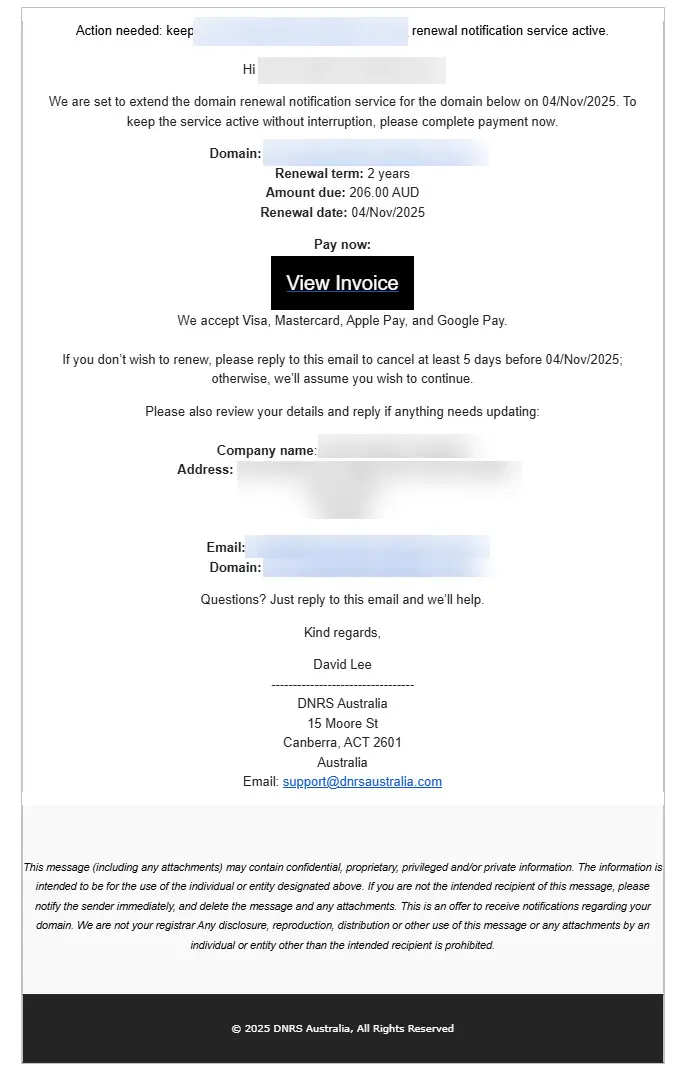
So, last Thursday evening I got an email from a client. The subject line read:
“Renewal notifications for xxxxxx.com.au.”
The message said: “Is this legitimate?”
Straight away I knew it wasn’t. We manage all of this client’s domains, so if the renewal wasn’t from us, it had to be a scam. I fired back a quick reply: “Nope, it’s a scam — please delete it.”
A few minutes later, the client replied:
“Oh goodness, I am glad I checked — I usually just pay these.”
That reply stuck with me. Because how many people do just pay these without thinking twice? So, with 30 spare minutes up my sleeve, I decided to dig into it — partly out of curiosity, partly out of irritation
The Anatomy of a Scam
First stop: I ran a scan on the email and its attachments. No viruses, no malware — so far, so clean.
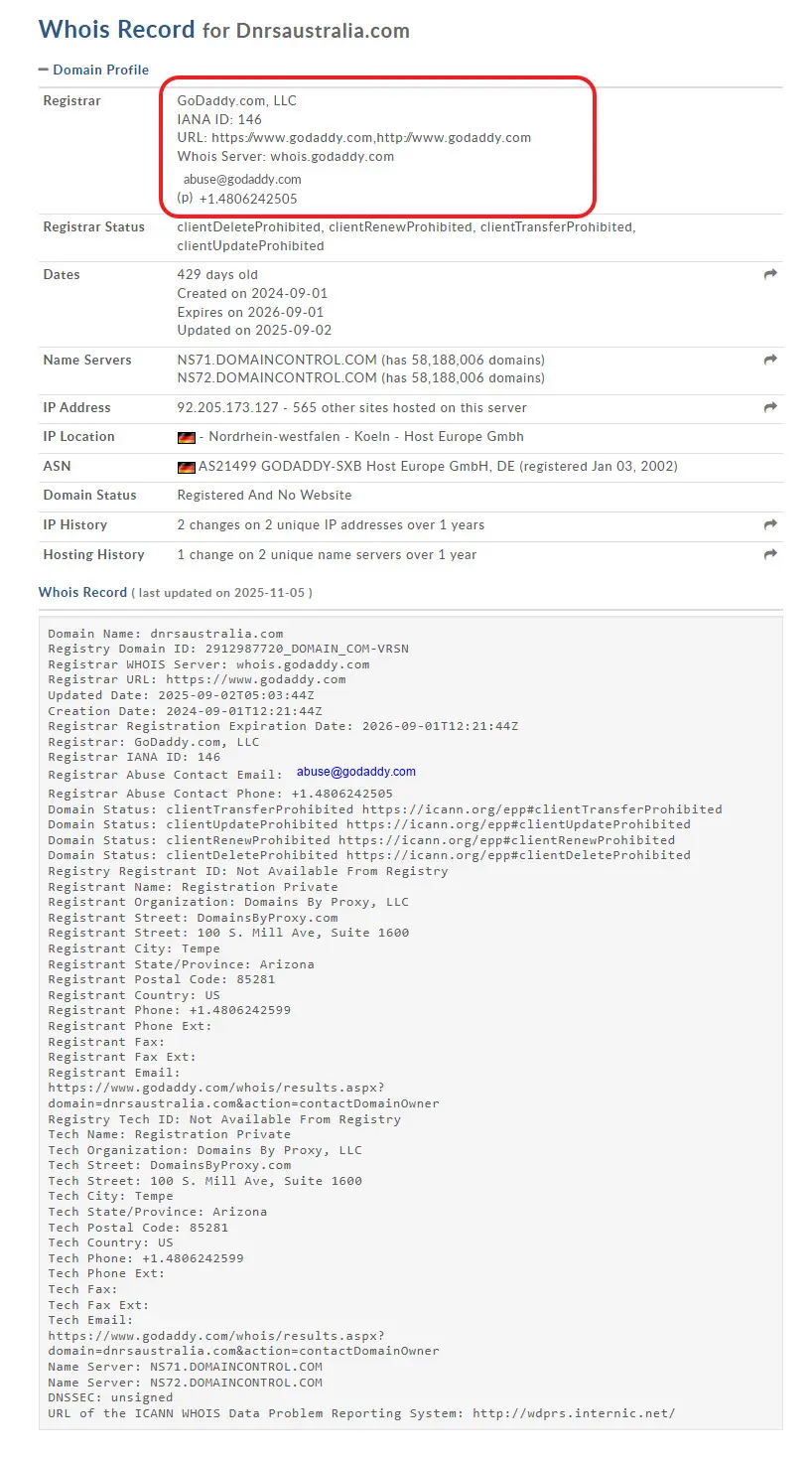
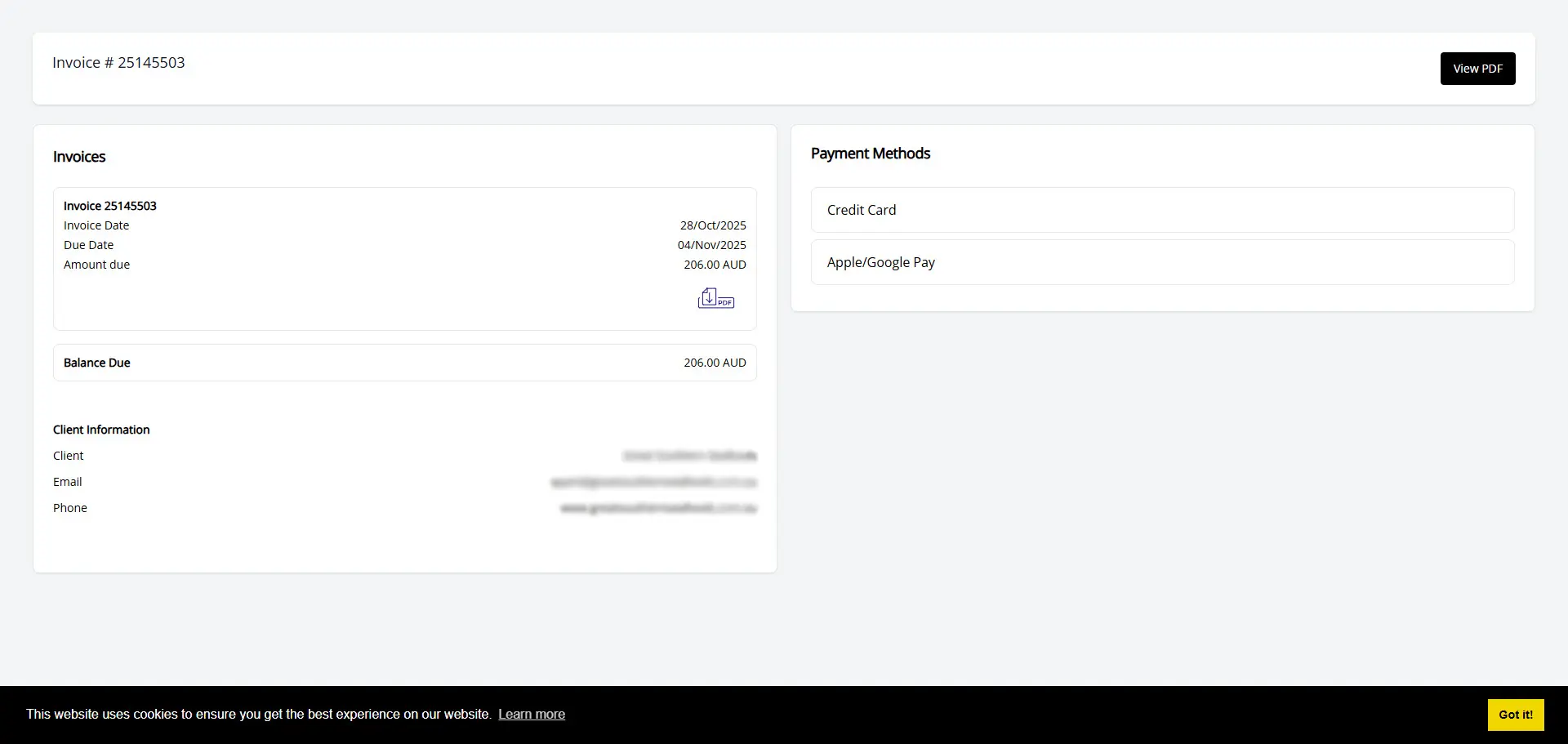
Next, I checked who owned the domain. Surprise, surprise — it was hidden behind a privacy wall (not unusual). Then I opened the “invoice.”
It looked pretty legit at first glance — clean layout, online payment form, and a real payment gateway: Stripe. The invoicing system was Ninja Invoicing, another genuine platform. So, it wasn’t one of those dodgy-looking scams — it was designed to feel real.
And here’s the kicker: the company name on the invoice was DNRS Australia, claiming to operate from 15 Moore Street, Canberra ACT. Their website — dnrsaustralia.com — looks professional enough to fool plenty of people. But don’t be fooled. It’s a scam operation.
Basically, it was a “spray and pray” setup — send enough fake invoices, and eventually someone pays.
Here’s the clever bit: they picked a domain that was registered for two years and sent the invoice smack in the middle of that period. So, if someone paid it now, they might not notice the double-up until much later — and by then, Stripe’s dispute window (120 days) would’ve closed.
Curiosity Turns Into Action
At this point, I could’ve just closed the case and gone about my evening. But something about scams like this really gets under my skin.
So I rolled up my sleeves and went full “digital detective.”
-
Step 1: Found the registrar — GoDaddy. Lodged a formal complaint with their abuse team.
-
Step 2: Reported the fake account to Ninja Invoicing — the scammers’ invoicing platform.
-
Step 3: Flagged it with Stripe, since they were processing the payments.
-
Step 4: Sent a report to Scamwatch Australia, with all the details.
If you’re going to scam small businesses, you’d better hope I don’t have spare time and a coffee in hand.
Why These Scams Work
Domain renewals are cheap and often managed by different providers. So getting an invoice from an unfamiliar company doesn’t always raise red flags — especially when people are busy and just want to “get it paid.”
That’s why these scams work. They rely on confusion, repetition, and timing.
How to Protect Yourself
Here are a few simple steps that make a big difference:
-
Keep all your domains with one provider.
It’s easier to track renewals and spot anything out of place. -
Make sure the person paying invoices knows who your provider is.
This goes for everything — hosting, software, subscriptions — not just domains. -
Ask the question.
Seriously, there’s no such thing as a stupid question. If something doesn’t look right, pause and check. A 10-second email can save you hundreds.
The Takeaway
Scammers are getting more sophisticated — cleaner invoices, legitimate-looking systems, even real payment gateways. But they’re still running the same old playbook: trick enough people into paying, and the numbers work in their favour.
So remember: slow down, check twice, and never be embarrassed to ask. That one small habit might just save you from a big headache — or a lighter bank account.